
One of the cool parts of one of the most unusual frontcourts the ACC is going to feature under Jon Scheyer this year is how the pieces can already be plugged and played. Size, skill, versatility, and upside for development, not to mention the chance to match the opposition’s style. Scheyer has choices, and more accurately, he has choices that aren’t merely carbon copies of each other in terms of strengths.
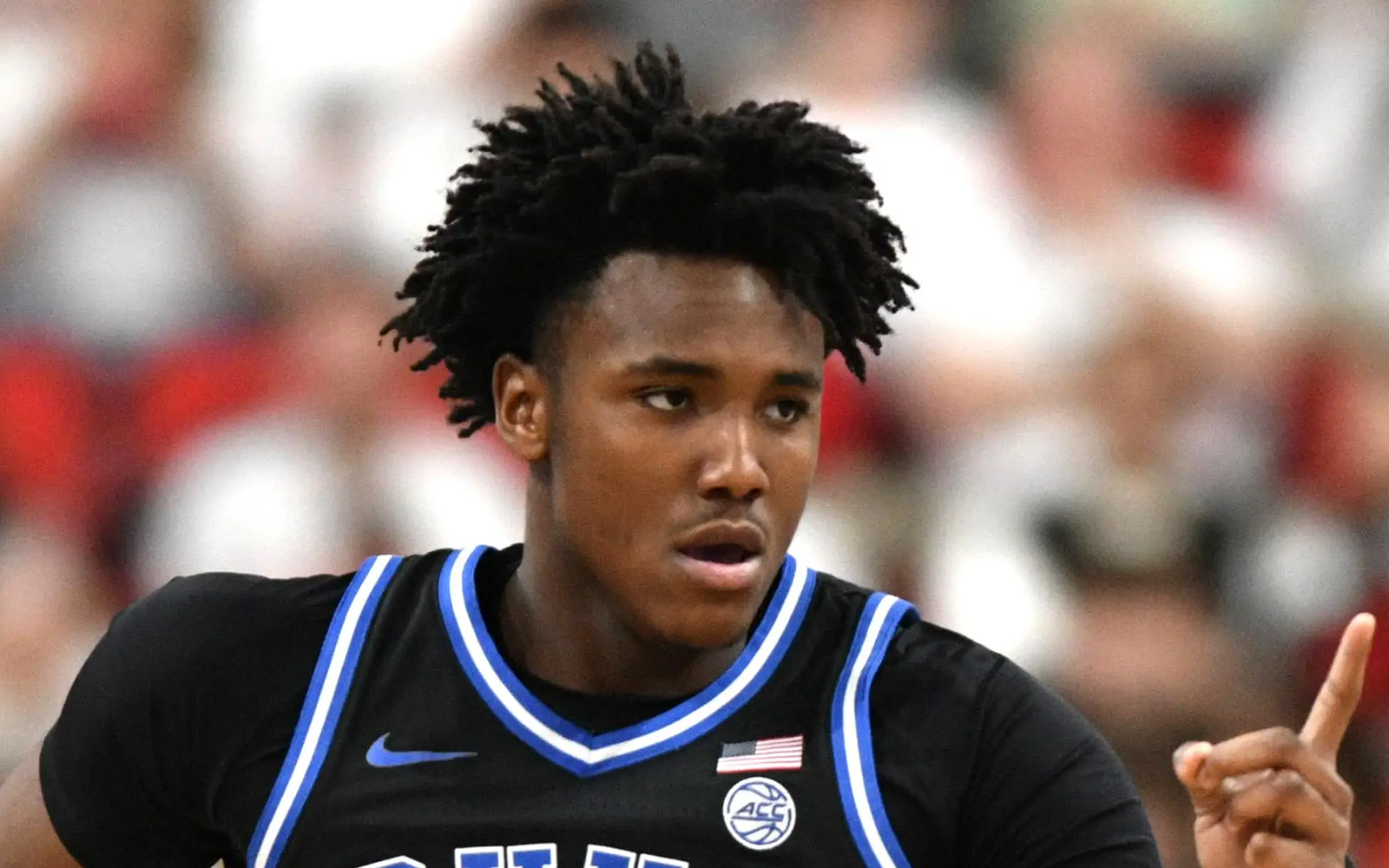
It’s the natural state of college basketball that all the buzz surrounds the newer cards; the guy with the greatest potential to be the biggest factor is the king Scheyer’s been holding all along. Pat Ngongba. Ngongba doesn’t have to be Duke’s best scorer or most glamorous player. What he offers is what becomes harder and harder to find as the games get bigger: pressure at the rim, rebounding, screening, interior defense, efficient finishing, and an unexpected passing dimension from the center position.
Will Ngongba help Duke? The question has never been whether he can. The 6-11, 250-pound sophomore averaged 10.1 points, 5.8 rebounds, 2.0 assists, and 1.1 blocks while shooting 60.6 percent from the field. He led the team in blocked shots with 34 and was named All-ACC Honorable Mention. Those are impressive stats, but they don’t fully capture his significance. But the real question is whether Ngongba can be healthy, whole, and at his best as the season hits its most critical points. Because in a front-court loaded roster, Ngongba might just be the piece that keeps all those other pieces working-and the piece that gets Duke to where it needs to be.
A Different Kind of Big
Ngongba doesn’t need to dominate possessions to impact them. Offensively, he can be the endpoint of an action rather than its beginning. He screens, rolls, establishes position, finishes efficiently around the basket, and creates opportunities for teammates with his passing. That last piece became particularly interesting during his sophomore season. Ngongba finished with 64 assists, fourth-most on Duke’s roster, despite playing center and averaging just 21.9 minutes. For a Duke team that will have plenty of players capable of creating offense, having a center who can keep an advantage alive rather than stopping the ball matters. Hit Ngongba on the short roll, and he doesn’t necessarily have to finish the possession himself. He can find a cutter, move the ball to the opposite side, or punish a defense that sends help.
Put him around talented guards and wings, and suddenly his simplicity becomes a strength. Duke doesn’t need another player demanding touches. Scheyer needs players who make those touches better. Big Pat does that.
Giving Duke a True Anchor
There is also something considerably less complicated about Ngongba’s value. He’s big. At 6’11 and 250 pounds, Ngongba gives Duke legitimate size at the five. That may not always seem particularly noteworthy during the regular season, when Scheyer can experiment with different combinations and exploit matchups with smaller, more versatile groups. It becomes much more important when games slow down and possessions become increasingly physical.
March has a way of eventually asking a very simple question: Can you deal with size? Ngongba gives Duke an answer. He can absorb contact around the rim, battle opposing centers, rebound in traffic, and provide the kind of interior presence that allows Duke’s other frontcourt players to play to their strengths rather than compensate for what a lineup is missing.
That’s part of what makes Scheyer’s construction of this frontcourt so interesting. Drew Scharnowski, Joaquim Boumtje-Boumtje and Cameron Williams offer different possibilities. They give Duke alternative looks, different skill sets, and the ability to adjust to opponents without simply replacing one big body with another. Ngongba, however, remains the player who can give the group its traditional anchor. There will be nights when another matchup makes more sense or another combination provides something Duke needs. That’s the benefit of having options. But when the Blue Devils need somebody capable of occupying the middle against a physical frontcourt, Ngongba doesn’t require Scheyer to manufacture an answer. He is the answer.
The Defensive Difference
Ngongba developed into a more versatile defender during his sophomore season while becoming Duke’s leading shot blocker. His combination of size, mobility, and rim protection gives the Blue Devils something that isn’t easily replicated simply by putting another tall player on the floor.
There was statistical evidence of that impact as well. According to CBS Sports, using Hoop-Explorer data during the NCAA Tournament, top-100 opponents shot just 51.8 percent at the rim with Ngongba on the floor compared with 60 percent when he was off it. That’s a substantial difference, but rim protection isn’t simply about blocks or even percentages at the rim. A legitimate interior defender affects everything happening in front of him. Guards can apply more pressure knowing there is size behind them. Wings can be more aggressive on closeouts. Help defenders don’t necessarily have to collapse as deeply toward the basket, potentially making Duke less vulnerable to kick-outs and offensive rebounds. The best rim protectors don’t just defend their own man. Their presence changes what the other four defenders are allowed to do. That’s the security Ngongba can provide.
| Class | G | GS | MP | FG | FGA | FG% | 3P | 3PA | 3P% | 2P | 2PA | 2P% | eFG% | FT | FTA | FT% | ORB | DRB | TRB | AST | STL | BLK | TOV | PF | PTS |
|---|---|---|---|---|---|---|---|---|---|---|---|---|---|---|---|---|---|---|---|---|---|---|---|---|---|
| FR | 30 | 0 | 316 | 46 | 64 | .719 | 0 | 1 | .000 | 46 | 63 | .730 | .719 | 24 | 33 | .727 | 30 | 50 | 80 | 23 | 11 | 16 | 7 | 51 | 116 |
| SO | 32 | 28 | 700 | 114 | 188 | .606 | 8 | 31 | .258 | 106 | 157 | .675 | .628 | 87 | 131 | .664 | 70 | 116 | 186 | 64 | 19 | 34 | 42 | 90 | 323 |
| 62 | 28 | 1016 | 160 | 252 | .635 | 8 | 32 | .250 | 152 | 220 | .691 | .651 | 111 | 164 | .677 | 100 | 166 | 266 | 87 | 30 | 50 | 49 | 141 | 439 |
There May Still Be Another Level
For everything Ngongba already does well, there are still obvious ways for him to expand his game. The jumper is probably the most intriguing. After attempting only one 3-pointer as a freshman, Ngongba attempted 31 as a sophomore. He made eight of them, good for 25.8 percent, so calling him a stretch five would obviously be premature. But the willingness to take them matters. Ngongba doesn’t need to suddenly become a 40-percent 3-point shooter to change how teams defend him. He simply needs to become enough of a threat that opposing centers can’t completely abandon him when he moves away from the basket. Even a reliable midrange shot or the ability to occasionally punish a defense from beyond the arc could create additional space for Duke’s guards and wings to attack. Combine that with his screening, finishing, and passing, and the offensive equation becomes much more interesting. A defender who can simply sit near the rim against Ngongba makes life easier. A defender who has to make decisions about how far he can stray from him creates opportunities elsewhere. The improvement doesn’t have to be dramatic to have a significant effect.
The Most Important Development Might Be Availability
Of course, there is an unavoidable part of the Ngongba conversation about health. Ngongba missed time as a freshman and then dealt with another foot issue late in his sophomore season. He missed Duke’s ACC Tournament run and the opening game of the NCAA Tournament before returning for the final three games. The timing couldn’t have been much worse.
By March, teams have spent months developing rotations, establishing defensive responsibilities and figuring out which combinations work together. Losing a starting center at that point doesn’t simply remove his points and rebounds from the box score. It changes everything around him. Ngongba eventually returned, but he averaged only 17.1 minutes over his three NCAA Tournament appearances. That’s why the biggest development for Ngongba this season may not be a new post move, an improved jumper, or another step forward defensively; it may simply be availability. Duke doesn’t necessarily need Ngongba to become a radically different player. A healthy version of the player it already has, with another offseason of development behind him, could be plenty.
Duke Doesn’t Need Ngongba to Be the Star
That’s ultimately what makes Ngongba such an interesting piece of this roster. Championship teams aren’t constructed entirely from stars. They’re built from players whose skills complement one another and, just as importantly, continue to work when the opponent changes. Duke should have scoring. It should have shooting. It should have length, athleticism, and players capable of creating with the ball. Ngongba can provide something different.
He can be the screen that creates the opening. The extra passer who turns an advantage into a layup. The body keeping an opposing center away from the rim. The rebound that ends a defensive possession. The defender waiting when a guard gets beaten. None of those things are particularly glamorous, and most won’t dominate a highlight reel but they become enormously important in a one-possession NCAA Tournament game.
Duke has spent the last two seasons getting close enough to understand exactly how small the margins become at that level. Getting over the hump probably won’t come down to one player, and it certainly won’t come down to one statistic, but it may come down to one possession. One rebound. One screen. One rotation. One blocked shot.
Scheyer has spent the offseason adding different pieces to a frontcourt designed to give Duke answers for whatever March throws at it. But perhaps the most important piece wasn’t one he needed to find in the portal, overseas, or on the recruiting trail. It was already in the deck. And if Patrick Ngongba is healthy enough to be standing in the middle of it all when Duke’s season reaches its biggest moments, he may be the piece that makes the rest of the hand work.