
Duke’s Freshman Class and the Beauty of Not Being the Man… Yet
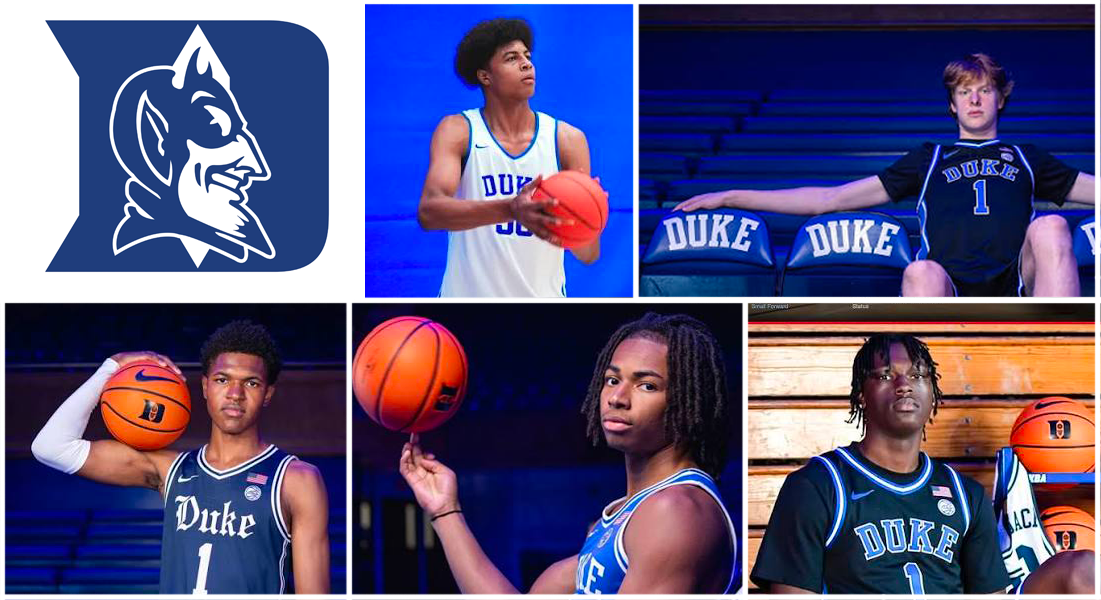
For years now the elite group of first-year students at Duke have had to face a well-known question: who is going to be the next superstar? As soon as Zion Williamson arrived in Durham, it was expected that he would rescue the program. Cooper Flagg, when he entered college basketball, was the most highly anticipated prospect in decades and immediately became the key figure in a team aiming for a championship, although Kon Knueppel turned out to be a surprisingly good second choice. It is not simply expected of elite recruits at Duke that they should just make a contribution—they are expected right from the start to become the star player. Cameron Williams, Deron Rippey Jr., Joaquim Boumtje-Boumtje, Bryson Howard, and Maxime Meyer are entering Durham with a brand-new situation, and that situation might be the most valuable feature of this class.
Physicality is the First Hurdle.
It is necessary to first grasp why the move from high school to college basketball is so difficult; once you do that, the roster that Duke now has appears to be much more important. College basketball is quicker, more powerful, and considerably more physical than any of the games that these players have taken part in previously. The advantages that made them stand out in high school or on the international scene do not carry over at the beginning of their college careers. They will have to make decisions a great deal more rapidly.
The defensive assignments will be much more complicated. You can’t just fix all that by showing talent—it takes time and repeated efforts. The fact that the Duke team has a seasoned roster means that this approach can work more effectively, since the experienced players can take on most of the responsibility and allow the freshmen to learn the game without the program suffering from their difficult adjustment period.
A Different Kind of Roster
The team’s roster is based on a quality that has now become very rare in college basketball—experience. It is a group of upperclassmen and returning players who are familiar with the speed of ACC basketball and know what is required to compete for and win at the top level of the game. This has a major effect on those players who are joining the program.
Cameron Williams won’t be the team’s leading scorer right away; rather, his influence will probably begin on the defensive side since his offensive abilities will have to develop within the existing system. Deron Rippey Jr. It is not necessary for him to be the team’s main ball-handler from day one. Because of his speed, good vision, and strong defensive determination, he is able to make a significant difference from the very beginning as he gets used to playing under a college offensive system and learns how to run a team effectively. Bryson Howard’s ability to shoot and the versatility he shows offensively will be of great help to the Blue Devils even though he is not required to carry the full offensive burden. Joaquim Boumtje-Boumtje has size, skill, and versatility, which will enable Duke to include him, together with a solid foundation of basic skills upon which to build as he continues his physical development.
Maxime Meyer might perhaps gain the most from the present state of the roster. It is common for young big men to receive unjust criticism for their lack of output at the beginning of their college careers, since big men take longer than guards or forwards to develop. All the qualities of a developing center—such as strength, good positioning, a good understanding of the college game, and the ability to carry out his actions against opponents who are more physically imposing—take a long time to develop. Meyer agreed on the condition that it would take some time to improve his game, and that kind of awareness is something that you seldom observe among top-level recruits these days. The depth of Duke’s team may give Meyer the time—which almost no top recruit gets—time to develop. You can’t point to any player on this freshman team who is a one-and-done type, but then again there is no weakness; on many counts there is in fact a strength.
The Noise Will Come Anyway
One of the things this team will have to deal with isn’t what happens on the court; it’s the noise surrounding it. Duke basketball is under constant scrutiny, and both the media and social media won’t tolerate delays. As soon as a highly ranked freshman has a quiet performance or goes through a slow period, the criticism will follow. The rankings will be mentioned. The player will be compared unfavorably to Flagg and Zion. What is in fact smart and experienced roster building will be portrayed as a disappointing recruiting class or as evidence that the freshmen “aren’t ready for Duke.” That is the way in which a program of this kind is covered; nuance doesn’t translate well onto a timeline. The truth is that constructing a roster based on experience, with the freshmen gradually taking on defined roles rather than being thrown into the game immediately, is a purposeful and intelligent method of building a team. It’s just not something that lends itself to an easy hot take.
Well, What Exactly is this Class?
There is no need for any of the freshmen at Duke to carry the program, since there is no pressure on them to act like Williamson and Flagg did. The team is entering a program that already has all the necessary parts and experience to be successful, and they will have the chance to develop gradually into their positions rather than being given those roles before they are ready to perform. The true measure of this first-year class won’t be determined by which individual becomes the main star in the first year, but will instead be the total effect that the whole group has as each player develops into something more and the strength of the Duke program increases as this process takes place over two and three years.